If you’ve spent any time scrolling through YouTube Shorts, TikTok, or Instagram Reels lately, you’ve almost certainly been fooled.
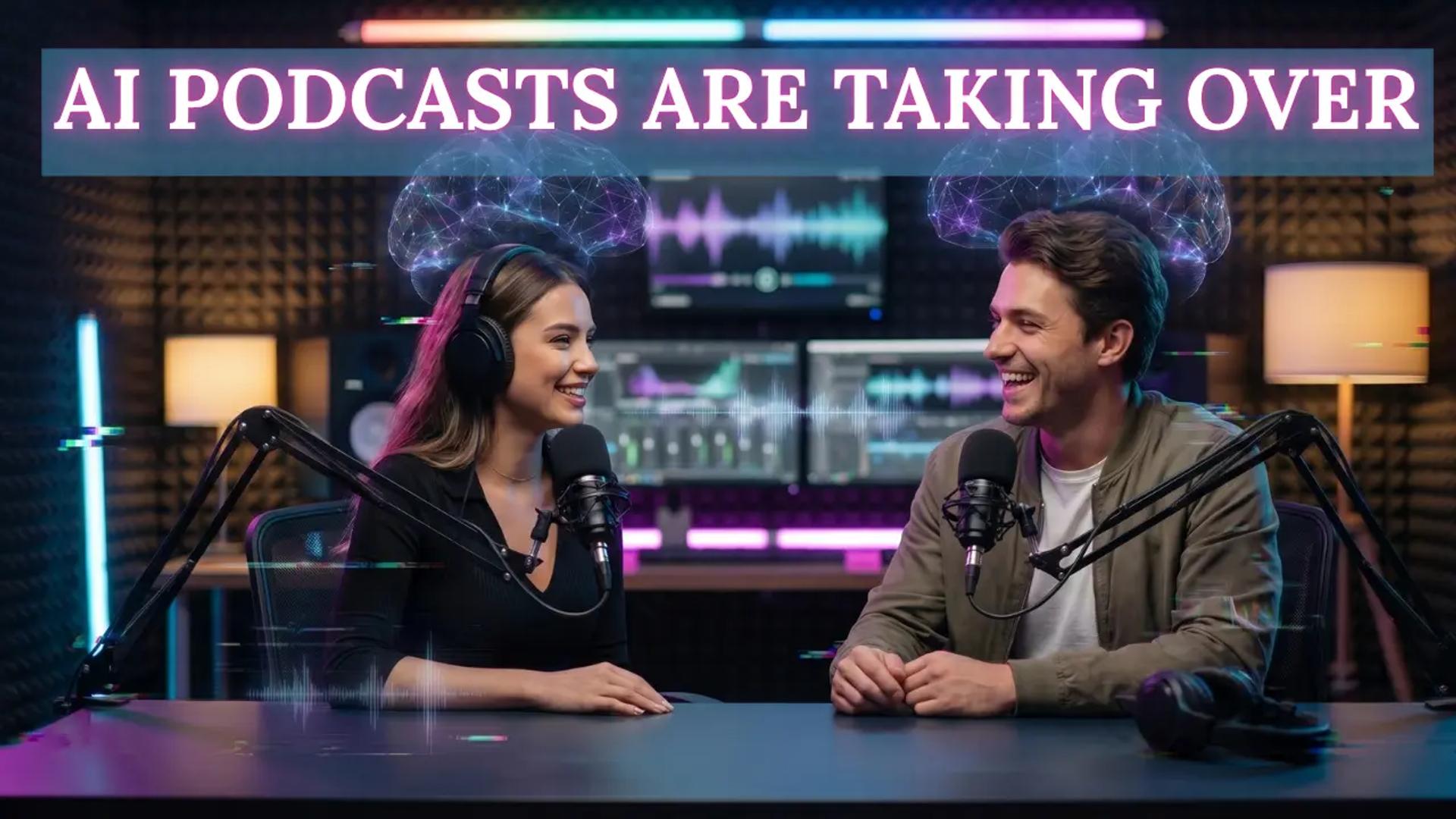
You’re listening to a clip of a podcast. Two hosts are having a dynamic, energetic conversation about a niche tech topic, a historical event, or a new marketing strategy. They interrupt each other. They laugh. They use filler words like "um" and "you know." It sounds exactly like a high-end studio production.
But neither of the hosts actually exists. The studio doesn't exist. There were no microphones.
The entire audio track was generated by an AI in about three minutes.
The "Fake AI Podcast" trend has exploded into one of the most effective ways to farm engagement and repurpose boring content in 2026. For content creators and campaign managers, it is a cheat code for video automation. Here is exactly how people are pulling this off, the tools they are using, and how you can replicate the workflow to drive traffic.
The Engine: Google’s NotebookLM
The undisputed king of the fake podcast trend right now is Google’s NotebookLM.
Originally launched as a simple AI research assistant for taking notes on massive documents, Google quietly introduced a feature called "Audio Overview." It completely changed the game.
Instead of just summarizing a PDF with bullet points, NotebookLM takes your source material—whether that is a 50-page whitepaper, a link to a YouTube video, or a technical website audit—and transforms it into a two-person radio show.
Why NotebookLM Sounds So Real
Older text-to-speech tools sounded like Siri reading a textbook. NotebookLM's underlying audio model was trained on the cadence of human conversation.
- The Banter: The two AI voices (usually a male and a female host) are programmed to sound like they are discovering the information in real-time. They act surprised, they validate each other's points, and they summarize complex topics using conversational analogies.
- The Imperfections: The model intentionally leaves in breaths, pauses, and overlapping speech. It is the "messiness" of the audio that tricks the human brain into believing it is real.
The 2026 Customization Update: Recently, Google added the ability to steer these podcasts. You can now click the settings icon before generating the audio and tell the AI exactly what to focus on, choose the length, and dictate the format (like a "Deep Dive" or a "Harsh Critique").
The Custom Voice Hack: ElevenLabs
While NotebookLM is incredible for quick, out-of-the-box generation, professional creators and marketers who want strict brand consistency are taking a more manual route using ElevenLabs.
If you are running a specific faceless channel—say, a channel dedicated to dark psychology or technical SEO tips—you don't want the same default NotebookLM voices that everyone else is using.
The ElevenLabs Workflow:
Creators use a text model (like ChatGPT or Claude Opus) to write a script specifically formatted for multiple speakers. They prompt the AI to include stage directions like [Laughs] or [Sighs].
They copy that script into ElevenLabs.
They assign highly specific, cloned voices to each speaker. ElevenLabs allows you to adjust the "stability" and "clarity" sliders. By lowering the stability, the AI voices sound more emotional and unpredictable, mimicking a raw, unedited microphone feed.
This method takes slightly longer, but the output is uniquely yours and immune to getting flagged as repetitive content.
Turning Audio into Viral Video (The "Faceless" Strategy)
Having a great piece of fake podcast audio is useless if you don't have visuals. You can't just upload a black screen to TikTok. Creators are pairing this AI audio with specific visual formats to hack the algorithm.
1. The Lip-Sync Avatar
This is where the trend gets slightly dystopian. Creators are using AI image generators to create an image of a person sitting at a podcast mic. Then, using tools like HeyGen or Kling 3.0, they feed the NotebookLM or ElevenLabs audio track into the image. The software perfectly syncs the lips and facial micro-expressions of the AI image to the audio. The result looks exactly like a real video podcast clip.
2. The Split-Screen dopamine loop
The most common (and cheapest) method. Creators drop the AI podcast audio into an editor like CapCut.
- The top half of the screen shows satisfying, high-retention footage (like someone power-washing a driveway, cutting kinetic sand, or GTA gameplay).
- The bottom half features aggressive, bold, auto-generated captions highlighting the podcast conversation. It requires zero on-camera talent and can be produced at an industrial scale.
The Digital Marketer’s Playbook: How to Capitalize
If your daily focus revolves around generating leads, increasing organic traffic, or managing campaigns, this isn't just a fun toy. It is a massive lever for content repurposing.
Think about the most boring, high-value assets you own. Do you have a dense, 20-page PDF on website auditing? Do you have a technical breakdown of how to integrate a specific API?
Nobody wants to read a 20-page PDF on their phone. But if you drop that exact PDF into NotebookLM and generate a 10-minute, highly engaging podcast about it, your content suddenly becomes consumable.
How to use it for Lead Gen:
Take a successful blog post and convert it into an AI podcast.
Use CapCut to create a 60-second teaser clip with dynamic captions.
Post the short clip to YouTube Shorts and LinkedIn.
Tell the audience: "Listen to the full deep-dive episode and download the original template at the link in the comments." You are taking a static, text-based asset and squeezing a completely new, high-retention audio funnel out of it without ever booking a studio or buying a microphone.
The Bottom Line
We have crossed the uncanny valley of audio. The barrier to creating professional-grade, conversational media has dropped to zero.
If you want to dominate the content game in 2026, stop worrying about whether the AI sounds slightly robotic and start worrying about the source material you feed it. The creators who win this year will be the ones who feed the best, most original data into these tools, letting the AI do the heavy lifting of making it sound entertaining.